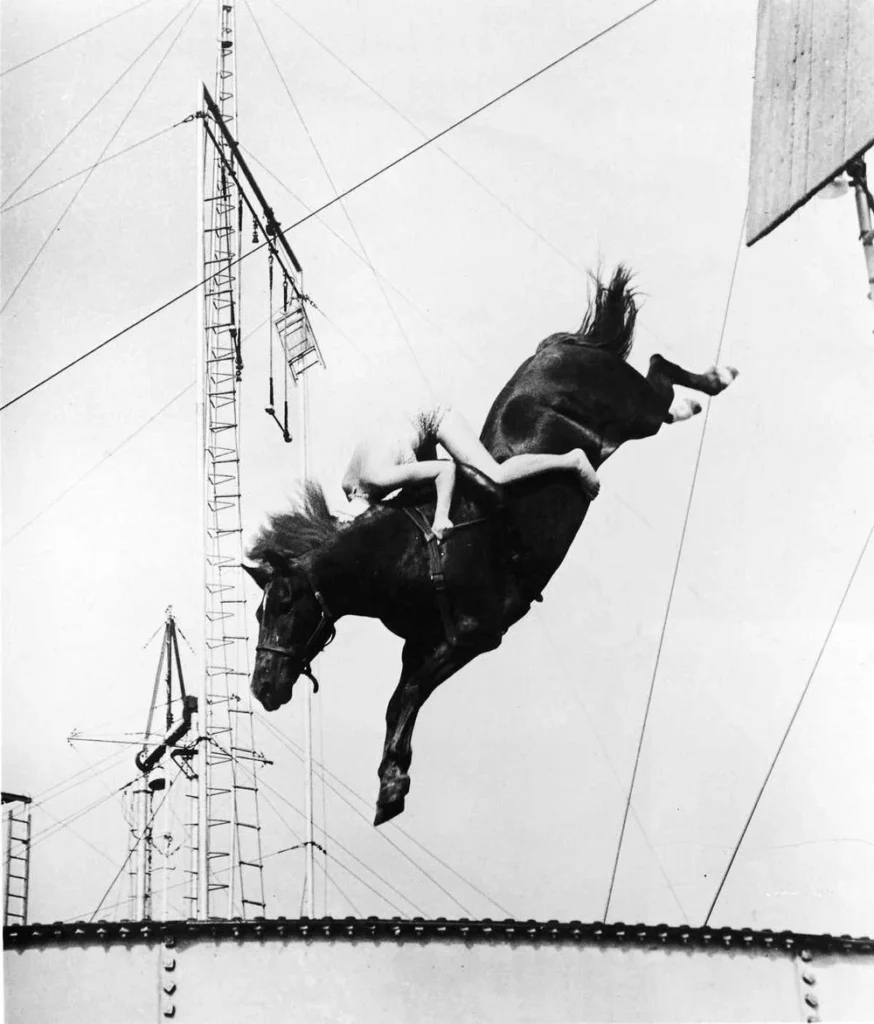
A horse stands on a platform high above the ground, with a young woman on its back. Below them are a pool and an expectant audience. Then comes the jump: horse and rider plunge into the water to the spectators’ applause.
It sounds like a scene invented for a film, yet the diving horse act, also known as horse diving, really existed. It became one of the most recognisable attractions in Atlantic City, in the United States, where it was performed at the Steel Pier from the late 1920s until 1978. Source: Atlantic City Free Public Library.
Today, photographs of those performances provoke both astonishment and unease. They tell of an era of entertainment in which the desire to surprise an audience led to extreme acts, including those involving animals.
What was horse diving?
Horse diving was a spectacle in which a horse plunged from a raised platform into a pool of water, often with a woman rider on its back.
The structures and arrangements could vary. In the act described by the Smithsonian archives, the platform was around 12 metres high and the pool just over 3 metres deep. The rider mounted the horse as it reached the top of the structure, then accompanied it in the plunge. Source: Smithsonian, Sonora Carver Papers.
Rather than a folk custom, it was an organised attraction belonging to the world of travelling shows and amusement parks.
The origins of diving horses
The figure most closely associated with the origins of horse diving is William Frank “Doc” Carver, a marksman and showman involved in performances inspired by the American West.
Different stories surround the act’s beginnings. According to one of the best-known versions, Carver came up with the idea after falling into water with his horse when a bridge collapsed. This account should be treated cautiously: later reconstructions have highlighted conflicting versions and a strong element of self-promotion. Source: Atlas Obscura.
The bridge episode therefore remains part of the legend. The act’s commercial success, however, is documented: diving horses moved from travelling shows to a venue that became central to their history.
Atlantic City and the Steel Pier show
Before it became associated primarily with casinos, Atlantic City was already a tourist destination known for its boardwalk, piers and entertainment.
In this setting, the Steel Pier offered attractions capable of turning a day at the seaside into a memorable event. Horse diving fitted this search for spectacle and became one of the city’s signature shows. Atlantic City’s public library preserves the history of the act and its performers, including sisters Sonora and Arnette Webster. Source: Atlantic City Free Public Library.
Looking at these images today also means confronting the ways our attitudes have changed. What once drew audiences and applause now raises questions about animals’ roles in entertainment.
Sonora Webster Carver: the rider who continued after losing her sight
The best-known figure in this story is Sonora Webster Carver, who joined Doc Carver’s show in 1923.
In 1931, a retinal detachment sustained during a dive caused her to lose her sight. She nevertheless continued performing until 1942. She later described her experiences in her autobiography, A Girl and Five Brave Horses, published in 1961.
Her life inspired the Disney film Wild Hearts Can’t Be Broken, released in 1991 and loosely based on the book. The Smithsonian archives hold documents relating both to her career and to the making of the film. Source: Smithsonian, Sonora Carver Papers.
Sonora’s determination is an important part of the story. It should, however, be considered separately from an assessment of the act and the conditions in which it took place.
Was horse diving dangerous?
Injuries to people are documented, starting with Sonora’s accident. Historical accounts of the treatment of the horses, meanwhile, require careful consideration.
Some performers and supporters described animals that were cared for affectionately and not forced to jump. Animal protection organisations opposed the act because of the risks of fear and injury. These opposing views also appear in reporting on attempts to revive it. Source: The Philadelphia Inquirer.
For anyone assessing the practice today, the absence of a visible accident is not enough to demonstrate an animal’s welfare. Equally, period photographs alone cannot establish every detail of the horses’ training or living conditions.
Why did the diving horse show end?
The long-running horse diving show at the Steel Pier ended in 1978. According to The Philadelphia Inquirer’s account, economic factors brought that period to a close.
There was a brief revival in 1993, followed by further opposition. In 2012, another proposed return was abandoned after protests from animal welfare organisations and a petition. Source: The Philadelphia Inquirer.
It is therefore inaccurate to attribute the show’s disappearance to a single ban or one sole cause: the venue’s financial history and opposition to later revivals belong to different periods.
A story that changes how we look at horses
The history of diving horses retains the unusual fascination of archive photographs, but above all it encourages reflection on human expectations of animals.
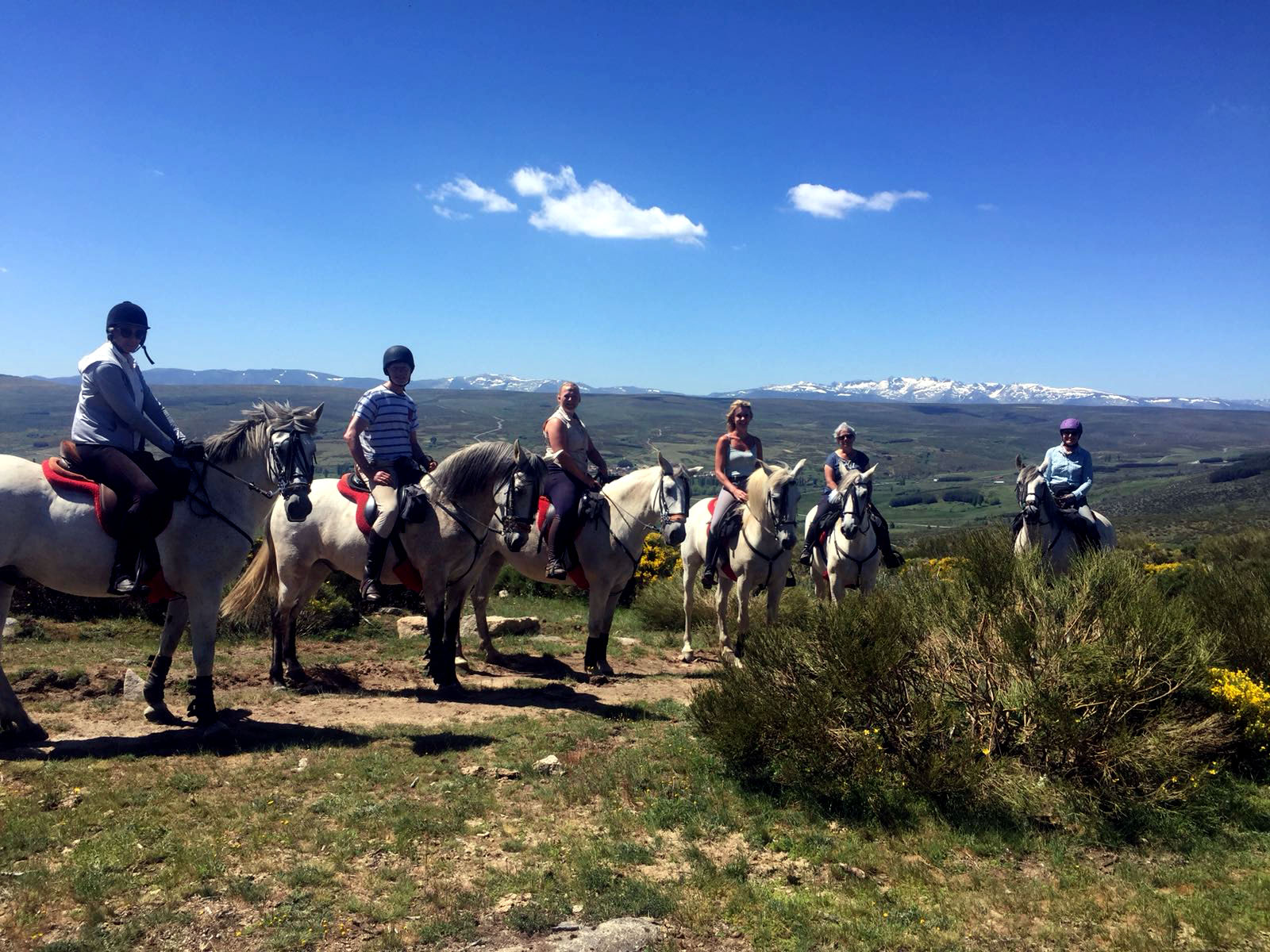
For people who love riding and horse riding holidays, learning about these stories can help inform more thoughtful choices. Observing the horses’ condition, the quality of their care and the attention paid to their needs matters as much as the beauty of an itinerary.
A day in the saddle can create lasting memories through simple experiences: a woodland trail, a changing landscape, and the time needed to develop an understanding with your equine companion.
This attention can form the basis of a respectful approach to equestrian tourism.
Explore our horse riding holidays and find inspiration in new destinations, stories and encounters in the saddle.