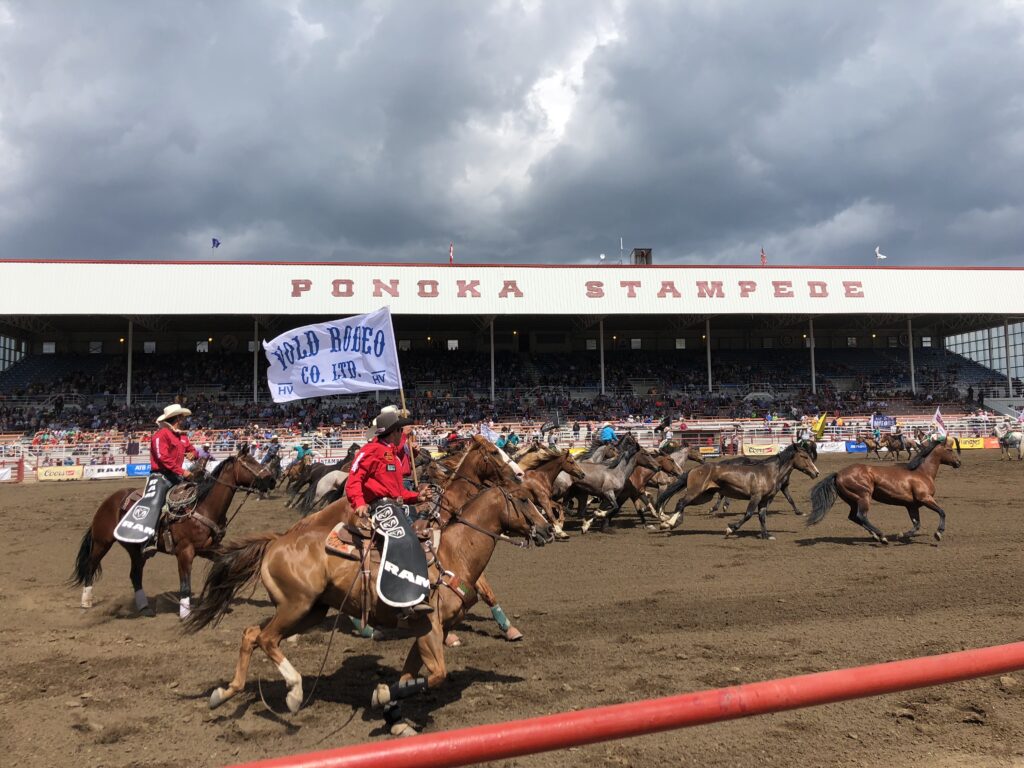
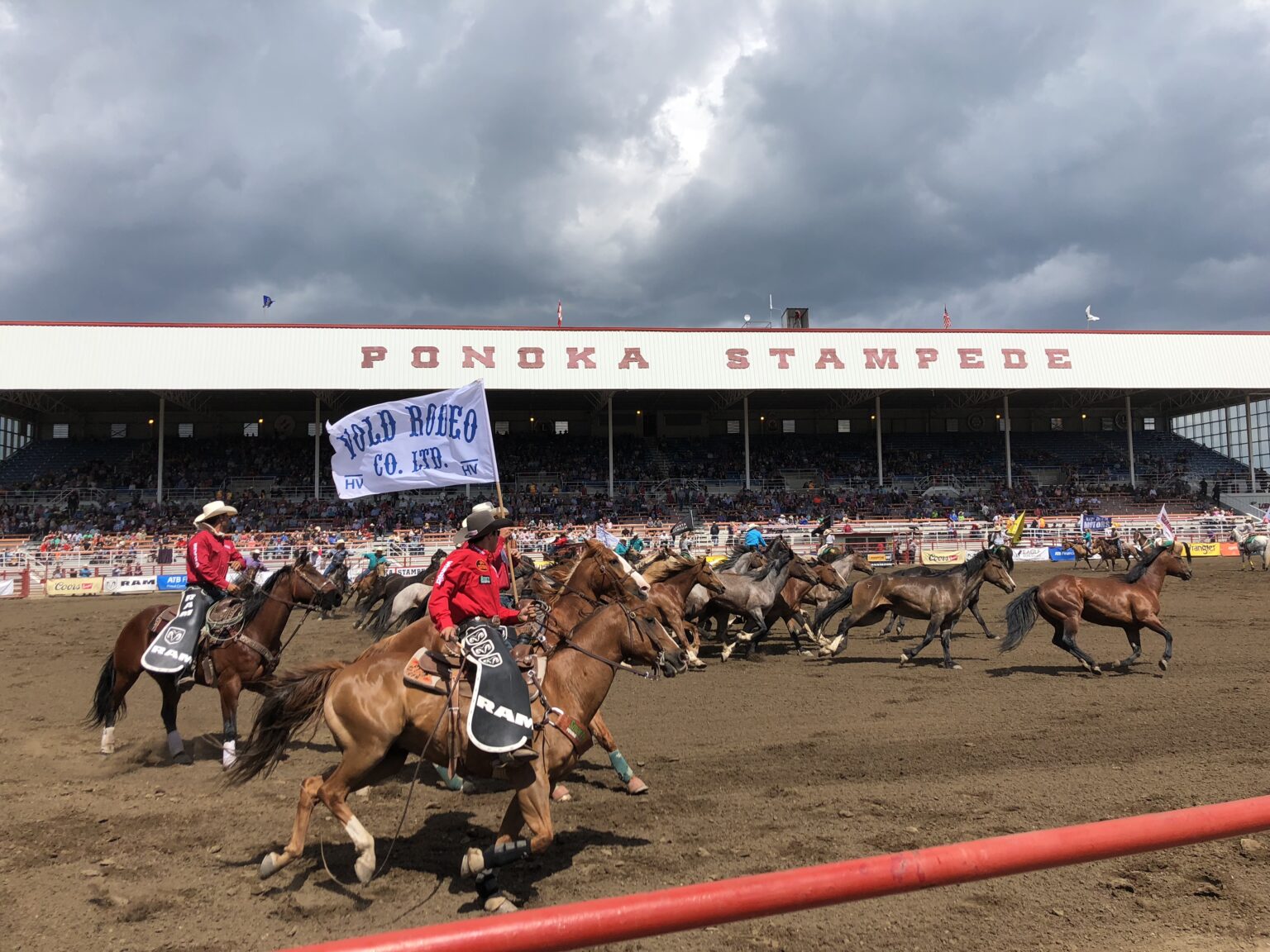
Dust rises in the arena, the grandstands are lively, and teams of cowboys tackle a challenge demanding speed, coordination and composure. Wild Horse Races, which feature in the history of the Ponoka Stampede, reveal one of the most intense aspects of North American rodeo culture.
For anyone dreaming of a working ranch holiday, these competitions can offer a starting point for discovering a wider world: ranching communities, working horses and days spent outdoors.
The journey begins in Alberta, Canada, but the cultural thread crosses the United States border and continues through the wide-open spaces of the West.
Ponoka Stampede: the West is alive in Canada too
When we think of cowboys, we often picture Wyoming, Montana or Texas. Western Canada, however, also has a strong identity shaped by ranching and western culture.
Ponoka is in Alberta, and its Stampede is rooted in the life of the local community. The official history dates the start of the event as an organised two-day celebration, combining rodeo, races and festivities, to 1936. Source: Ponoka Stampede.
The rodeo also becomes a meeting place, where families, ranchers and competitors share skills and traditions that remain part of the region’s identity.
Talking about Ponoka therefore means talking about the North American West: a cultural world encompassing both the Canadian provinces and the United States.
What are Wild Horse Races?
Wild Horse Races are team rodeo competitions. In the traditional format, three competitors must hold a horse, saddle it, and enable one team member to mount and complete the required course.
Each member has a role: handling the lead rope, helping control the horse, or taking responsibility for the saddle and the ridden stage. The result depends on the whole team’s coordination.
The precise format varies according to the event’s rules. The official description for Cheyenne Frontier Days, another famous North American rodeo, explains this structure and states that the horses used in its competition come from ranches. The word “wild” should therefore not automatically be understood as meaning horses captured from the wild. Source: Cheyenne Frontier Days.
Wild Horse Races at Ponoka are also documented in historical reporting: the results published in 1938 already listed them among the Stampede’s competitions. Source: Billboard archive.
If you wish to watch them during a trip, check the programme for the particular edition you plan to attend.
From cattle work to rodeo culture
To understand the appeal of western competitions, it helps to look at ranch life.
Managing cattle calls for attentiveness, an ability to read animals’ movements, cooperation and riding skill. Rodeo has turned some of this practical knowledge into sporting events with their own timing, scoring and rules.
The connection is particularly clear in disciplines such as team roping, in which two riders perform complementary roles. The Ponoka Stampede’s official event descriptions also highlight this teamwork. Source: Ponoka Stampede, events.
The arena and the ranch nevertheless have different rhythms and objectives. A competition concentrates the action into a few moments; the day-to-day running of a ranch depends on consistency, patience and decisions suited to the situation.
It is this everyday dimension that visitors can discover during a working ranch stay.
What is a working ranch?
A working ranch is an active livestock operation. When it welcomes travellers, it offers an opportunity to learn about its activities and, where the programme allows, take part in some of them alongside the staff.
The day may follow the needs of the cattle, the weather and the season. This is part of what gives the experience its meaning: entering a place that continues to carry out its regular work.
This form of tourism offers a closer look at the relationship between a rider and a ranch horse. Choosing a direction, keeping the right distance from cattle and knowing when to stop acquire a practical purpose.
Teamwork also takes on a new meaning: guests learn to follow the guidance of people who know the animals and the land, adapting to the rhythm of the day.
Experience the West with Horse Voyage: a ranch stay in Wyoming
To turn an interest in cowboy culture into time in the saddle, Horse Voyage offers a ranch riding stay in Wyoming, in the Sundance area.
The programme features horses accustomed to ranch work, including Quarter Horses and Mustangs, with participation tailored to the rider’s experience and safety. Cattle work in more remote and challenging areas is reserved for experienced riders; less experienced guests have opportunities to get involved in gentler terrain, as described in the programme.
The hospitality also contributes to the immersion: rustic but comfortable accommodation, shared meals and a western atmosphere accompany the days on horseback. The proposal distinguishes its working ranch format from the guest ranch option offered in July and August. Explore the Wyoming ranch stay.
The connection with Ponoka is cultural: the Canadian rodeo and the Wyoming stay reveal different aspects of the western world. A visit to the Stampede is not listed among the ranch programme’s activities.
Working ranch or guest ranch: which experience should you choose?
If you are looking for a ranch holiday, start with a question: how much would you like to take part in the property’s everyday work?
A working ranch can be particularly appealing to travellers interested in livestock activities who are willing to adapt to changing needs and routines. A guest ranch places more emphasis on hospitality and activities organised for visitors. Both formats may be offered by the same property at different times of year.
Before choosing, compare your riding level with the activities on offer, the time expected in the saddle and the type of accommodation.
A rewarding holiday starts with clear expectations: an experienced rider may seek greater involvement in cattle work, while another traveller may prefer trail rides and an introduction to western riding.
Cowboy culture beyond the cinema
Wild Horse Races show the competitive, spectacular side of the West. Ranch life offers an encounter with its everyday side: preparing horses, observing cattle, sharing responsibilities and getting to know a place through the people who work there.
Exploring this culture also means paying attention to how animals are treated. Tradition provides historical context; the quality of an equestrian experience depends on the horses’ actual care and the skills of the people looking after them.
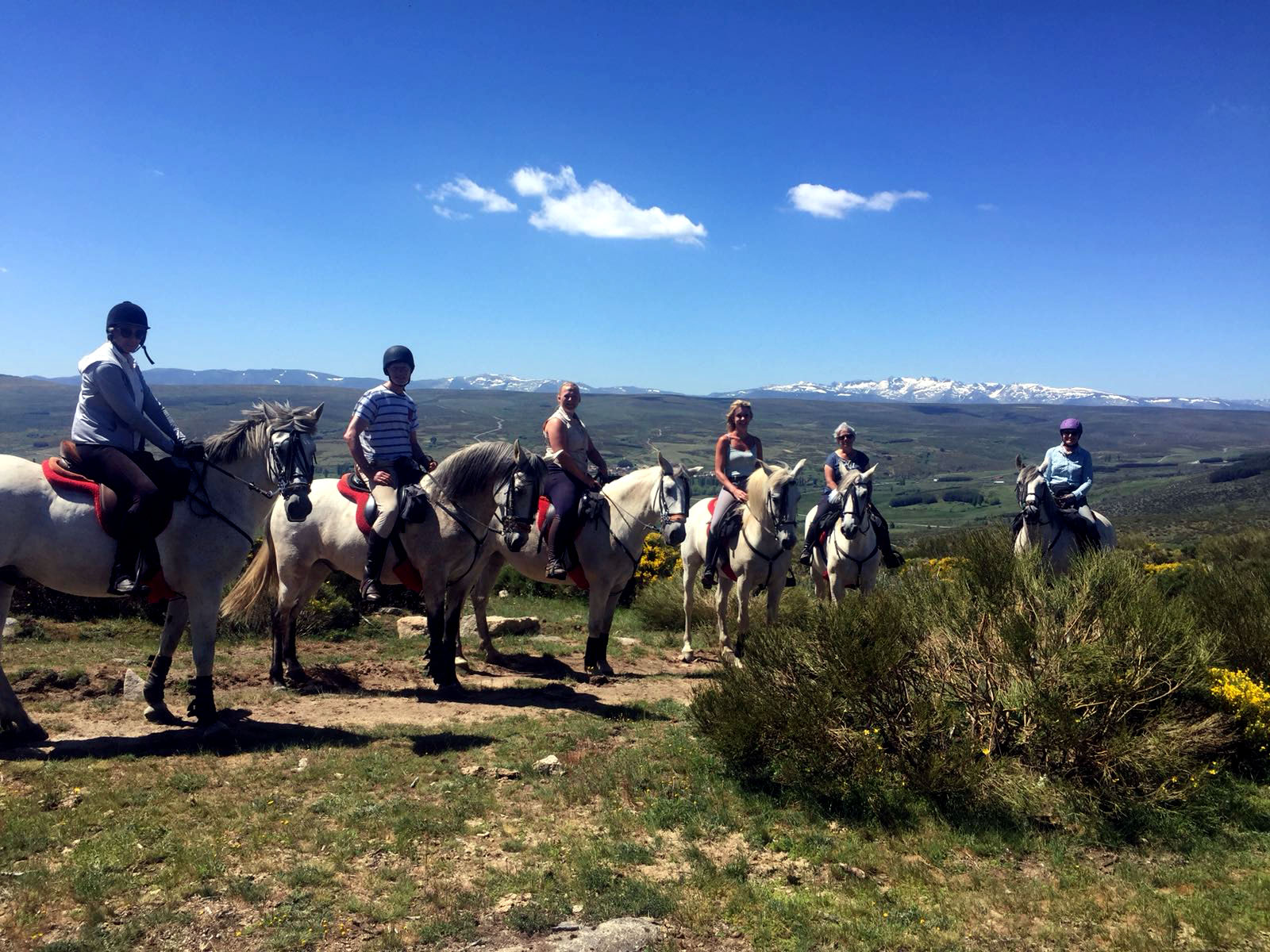
For people who love travelling in the saddle, the West’s appeal can be found in a simple moment: waiting for the guide’s signal, feeling the horse respond, and setting off together towards the next pasture.
Would you like to discover the West through ranch life? Explore Horse Voyage’s Wyoming proposal and contact us to choose a stay that suits your experience and expectations.