There are countries you can simply visit, and others that, to truly understand them, seem to require a horse. Colombia definitely falls into the second category.
Mountains, highlands, cultivated valleys, colonial towns, and ancient cobblestone streets tell a story in which the horse has played a fundamental role for centuries. For a horseback riding enthusiast, a trip from the Bogotá region to Santander and Barichara becomes more than just a vacation: it’s a way to immerse oneself in Colombia’s rural culture through one of its most important symbols, the Colombian Paso Fino.
And it is precisely when you arrive in Barichara, amid the ochre-colored cobblestone streets and the mountains of Santander, that the connection between the land, history, and horses becomes even more evident.
From the Andes near Bogotá to the rural heart of Colombia
Bogotá is located on the Andean plateau and is often the gateway for visitors arriving in Colombia. From here, as you travel north, the landscape gradually changes, leading you into the department of Santander, one of the country’s most spectacular regions.
This is a Colombia very different from the one known for its Caribbean beaches or big cities: rugged mountains, farmland, small villages, farms, and roads that follow routes established long before the advent of the automobile.
One of the most fascinating places in the region is Barichara, considered one of Colombia’s most picturesque historic towns. Its white houses, tiled roofs, cobblestone streets, and buildings constructed from local stone have preserved an atmosphere that seems almost frozen in time.
For those traveling on horseback, however, Barichara is above all the gateway to a much older history.
The Camino Real: A Road That Existed Before the Spanish Arrived
One of the best-known sections of Colombia’s Camino Real—the ancient road leading to the village of Guane—begins in Barichara.
Although the name “Camino Real” is of Spanish colonial origin, the route has its roots in the indigenous Guane people, who used a network of trails to communicate and trade throughout what is now Santander. These trails were later used and adapted during the colonial period.
Today, the stretch between Barichara and Guane is one of the region’s most famous historic routes. The official Colombian tourism website itself notes that Guane can be reached from Barichara on horseback via the Camino Real, as well as on foot.
Riding along this route means traversing a landscape of rock, dry tropical vegetation, low stone walls, and sweeping views of the Santander mountains. But above all, it means using the horse in the same way it has been used for generations: as a traveling companion and a means of traversing difficult terrain.
And this is where the most iconic horse of the Colombian equestrian tradition comes into the picture.
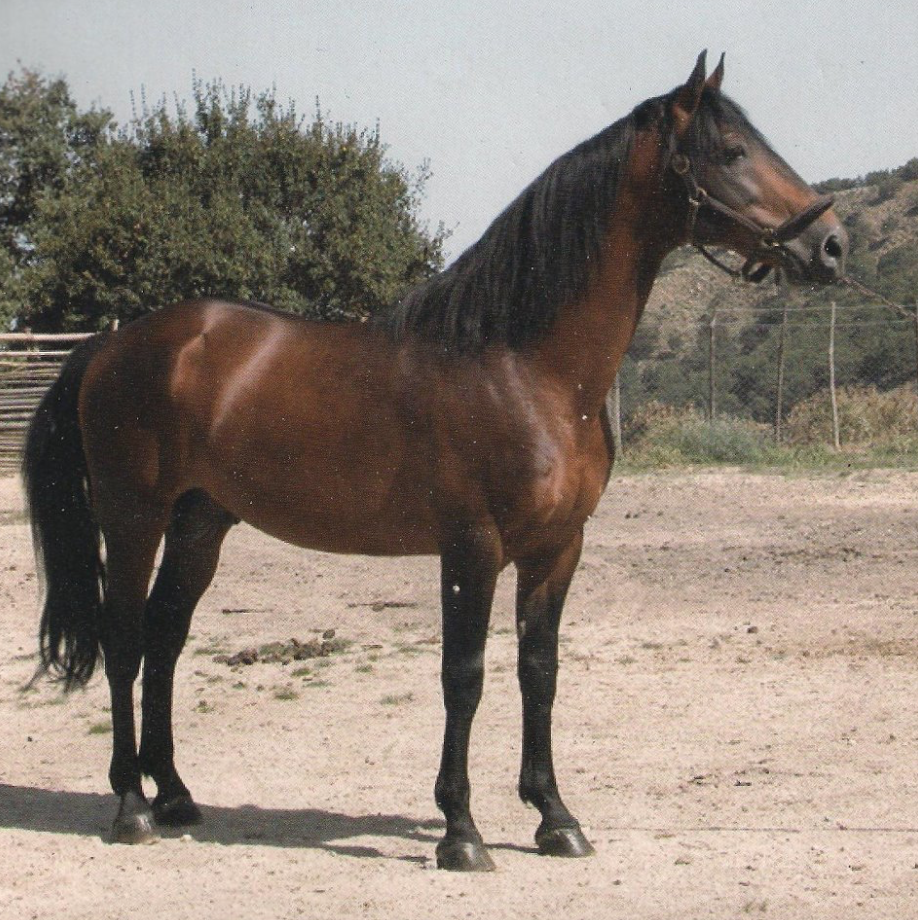
Colombian Paso Fino: a horse built for travel
The Colombian Paso Fino belongs to the large family of Criollo horses that developed in the Americas from horses brought from the Iberian Peninsula after the arrival of Europeans.
Genetic studies conducted on Colombian horse populations confirm the strong link between the Paso Fino’s maternal lines and horses of Iberian origin. Over the following centuries, selective breeding in Colombia gradually shaped a horse with its own distinct characteristics, giving rise to a horse population strongly identified with the country’s culture.
This is not just a show breed. The distinctive way these horses move indirectly reflects the region where they were bred.
Riding for many hours along mountain roads required animals that were agile, resilient, and, above all, comfortable for the rider.
And it is precisely his stride that makes him unmistakable.
That distinctive rhythm that makes the Paso Fino unique
The most famous characteristic of the Paso Fino is its distinctive four-beat gait, in which the limbs touch the ground one at a time, creating an extremely smooth movement.
CONFEPASO, the international confederation dedicated to Paso Fino horses, describes the Paso Fino as a horse of medium build, with a lively yet balanced temperament, known above all for its distinctive gait.
For those who ride it, the sensation is very different from that of traditional trotting.
The rider’s vertical movement is significantly reduced, and the horse seems to glide across the ground with a rapid, rhythmic succession of hoofbeats.
It is therefore not hard to imagine why this type of gait has become so important in a country characterized by long distances, mountains, and rural trails.
Modern scientific research has also studied the genetics of the various gaits of the Colombian Paso horse, demonstrating the extent to which selective breeding has influenced its different patterns of locomotion over time.
“Brio”: When Temperament Becomes Part of the Horse
When talking with Colombian breeders and riders, you often come across a word that’s hard to translate perfectly: brio.
It doesn’t just mean energy.
It is a combination of presence, sensitivity, responsiveness, and liveliness. A good horse must be alert, attentive, and responsive, yet at the same time remain manageable by the rider.
This combination contributes to the Paso Fino’s charm: beneath its elegant exterior lies a horse with a strong presence, capable of creating a sense of constant communication with its rider.
And it is perhaps precisely along a trail—far from competitions and exhibition slopes—that one can best understand its true nature.
Getting to Guane on horseback
As you leave the colonial streets of Barichara behind, the landscape gradually opens up onto the valley.
The Camino Real to Guane follows an ancient route through a territory that has been inhabited for centuries by the indigenous people of the same name. The small town still preserves important archaeological and paleontological artifacts from the region.
Riding down this road on horseback completely changes your perspective.
The pace slows down. You can hear the hooves on the stone, the rustling of the vegetation, and the subtle changes in the horse’s gait as the ground rises or falls.
For a horseback riding enthusiast, it’s one of those moments when the journey ceases to be merely geographical.
We are traveling along an ancient road using one of the modes of transportation that for centuries has made it possible to travel along it.
Barichara and Santander: A Colombia Deeply Rooted in Equestrian Culture
Santander offers an ideal setting for understanding just how much the horse is still an integral part of Colombia’s rural identity.
In the area around Barichara, horse rides take you through the countryside and mountainous landscapes, whilst longer routes can take you to some of the spectacular areas surrounding the Chicamocha Canyon. The horse-riding experiences on offer in the region often combine colonial towns, farms and stunning natural scenery.
But what makes a horse-riding trip in Colombia so special is not just the landscape.
It is an opportunity to discover a genuine equestrian culture.
The Colombian Paso Fino is, in fact, not merely a folkloric curiosity: the national equestrian sector has breeding farms, competitions and a highly developed federal system, and the Colombian Paso Fino is one of the officially recognised gaits in competitions organised by FEDEQUINAS.
The Colombian Ministry of Agriculture has also formally recognised the Colombian Paso Fino horse as part of its efforts to protect the country’s equine genetic heritage.
Getting to know a country through its horse
Every great equestrian culture has developed a horse capable of reflecting its land.
Iceland has its own small, hardy horse adapted to volcanic terrain. Argentina has the Criollo of the Pampas. The North African desert has shaped generations of Berber horses.
In Colombia, that story inevitably involves the Paso Fino as well.
Embarking on a journey from the mountains surrounding Bogotá to the region of Santander, reaching Barichara, and finally riding along the Camino Real toward Guane allows you to piece together all the elements of this history: the Andean landscape, the pre-Columbian peoples, the Spanish legacy, and an equestrian culture that, over the centuries, has transformed the horse imported from Europe into something deeply Colombian.
Perhaps this is the best way to discover Colombia.
Not just by watching it from a car window, but by listening to the steady rhythm of a Paso Fino’s hooves on the cobblestones of an ancient road.