There is something about horses that goes beyond their beauty, physical power and harmony. Those who know them well recognise the feeling: a horse can seem like an emotional mirror, quietly reflecting what we bring to the encounter.
In today’s fast-paced world, horses take us back to a more authentic way of life. And it’s not just a feeling: science now confirms what enthusiasts have always sensed.
Horses as a source of well-being
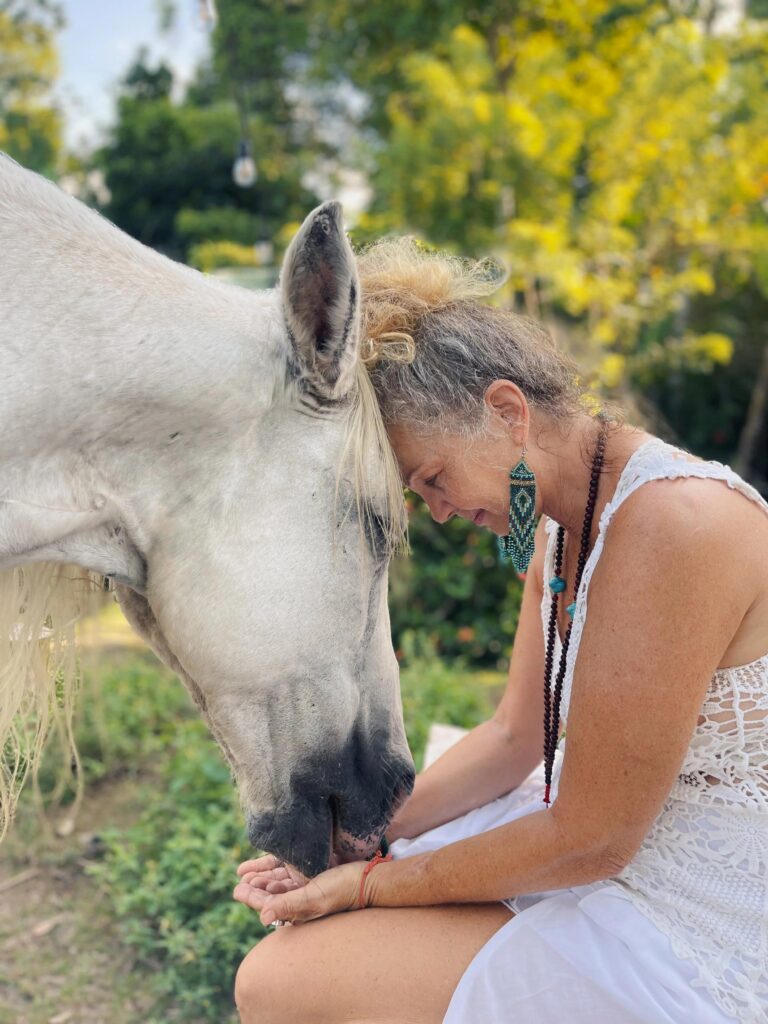
Horses do not judge, interpret or lie. They react directly and consistently to human emotional cues. This makes them a unique partner in personal development. What happens when we form a bond with a horse? We become more present, we unconsciously regulate our breathing, we develop body awareness and we learn to communicate non-verbally
In other words, the horse amplifies our inner state. If we are agitated, it reflects that back to us. If we find calm, it reinforces it. This process creates a kind of ‘natural biological feedback’, which is extremely powerful for our mental and physical well-being.
What the science says
It is not just a matter of perception: research into equine-assisted therapy has grown significantly in recent years. Several studies show that equine-assisted therapies:
- improve balance, coordination and motor control;
- improve balance, coordination and motor control;
- promote communication and social skills, particularly in people with autism spectrum disorders;
- reduce anxiety, irritability and hyperactivity.
Equine-assisted therapy, moreover, has an impact on both the physical and psychological levels, thanks to the horse’s rhythmic movement and the emotional bond that is formed. In practice, the horse works simultaneously on the body, mind and emotions. This integrated approach is difficult to replicate in other therapeutic settings. There are three key elements: movement, relationship and the natural environment. The result is an immersive experience that engages the whole person.
Beyond treatment: new experiences
of wellness
with horses
In recent years, the equestrian world has been embracing more holistic wellness practices that are accessible to everyone, not just those with therapeutic needs.
- Yoga with horses: practising yoga near horses can encourage awareness of the present moment. Paying attention to the horse and to our own tension may help us relax;
- Meditation with the Genesa Crystal: some practitioners include this geometric structure in meditation alongside horses. They describe the practice in terms of energy and resonance; these are spiritual interpretations, rather than established therapeutic mechanisms;
- Horse-assisted coaching (personal development): increasingly popular in the corporate world too, horse-assisted coaching helps to develop leadership skills, communication and emotional management. Once again, the horse acts as an immediate ‘mirror’.
A return to basics
A horse is not just an animal: it is a bridge. A bridge between body and mind.
Between emotion and awareness.
Between who we are and who we can become.
In a world that pushes us to go ever faster, the horse teaches us something fundamental: to slow down, to listen, to feel.
Perhaps this capacity to bring us into the present is one of the horse’s most valuable gifts.