Esplorare la Sardegna a cavallo significa immergersi in una natura autentica, tra altopiani basaltici, boschi di sughere e paesaggi che sembrano rimasti immutati nel tempo. Tra le esperienze più affascinanti per gli appassionati di equitazione c’è la possibilità di attraversare l’altopiano della Giara di Gesturi, uno dei luoghi più suggestivi dell’isola.
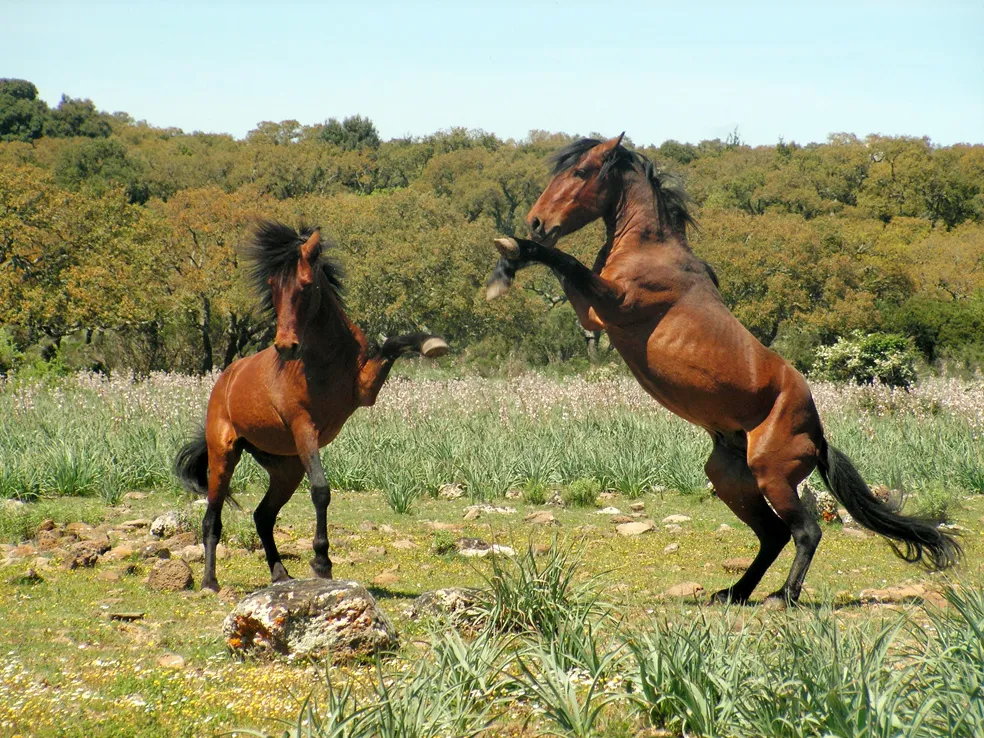
This is where one of Italy’s oldest and most fascinating horse breeds lives in the wild: the Cavallino della Giara, a small wild horse that symbolises Sardinian biodiversity.
Osservare questi cavalli nel loro ambiente naturale è un’esperienza unica per chi ama la natura, il trekking e il turismo equestre.
The Cavallino della Giara: a unique breed of horse from Sardinia
The Giara horse (also known in Sardinian as acheta, akkètta or cuaddeddu) is a breed native to Sardinia that lives in the wild on the Giara plateau.
This is a population of horses that has remained isolated for centuries due to the natural topography of the area. The plateau, situated at an altitude of between 500 and 600 metres, is surrounded by steep basalt cliffs which have limited contact with other horses, thereby preserving the breed’s original characteristics.
Oggi i branchi vivono ancora allo stato brado, adattati perfettamente a questo ambiente selvaggio e ricco di biodiversità.
Ancient origins, blending history and legend
The origins of the Cavallino della Giara are still not entirely clear and continue to fascinate scholars and enthusiasts alike.
Secondo alcune teorie, questi cavalli discenderebbero da equini nordafricani introdotti nell’isola dai Fenici o dai Greci tra il IV e il V secolo a.C.
Another theory, however, suggests that horses were already present in Sardinia long before that and had been domesticated by the Nuragic peoples. In this case, the Cavallino della Giara could be a direct descendant of the wild horse that was present on the island as early as the Neolithic period, as suggested by certain fossil finds dating from around 6000 BC.
Over the centuries, these small horses were widespread across much of Sardinia. It was only from the late Middle Ages onwards that their population gradually became concentrated on the Giara plateau.
Characteristics of the Giara pony
The Cavallino della Giara is a small but very hardy horse, perfectly adapted to the environmental conditions of the plateau.
Its main features are:
- Height at the withers: approx. 120 cm
- Coat: generally wild bay, black or dark chestnut
- Head: robust and fairly square
- Man: thick, with a very prominent tuft
- Neck: short and muscular
- Withers: not very prominent
- Croup: short and sloping, with a low tail set
- Eyes: slightly almond-shaped
- Limbs: slender yet strong
Despite its small stature, it is not classified as a pony but as a small horse.
Un carattere selvatico e indomito
One of the most fascinating characteristics of the Cavallino della Giara is its free-spirited and independent nature.
Having lived in the wild for centuries, these horses retain a lively, wary and often restless temperament. The herds roam freely across the plateau in search of water and pasture, adapting to a natural environment that can be harsh and unforgiving.
It is precisely this wild nature that contributes to the fascination these animals hold for those who observe them.
A symbol of Sardinian biodiversity
Today, the Giara pony is one of the most important symbols of Sardinia’s wildlife and equestrian tradition.
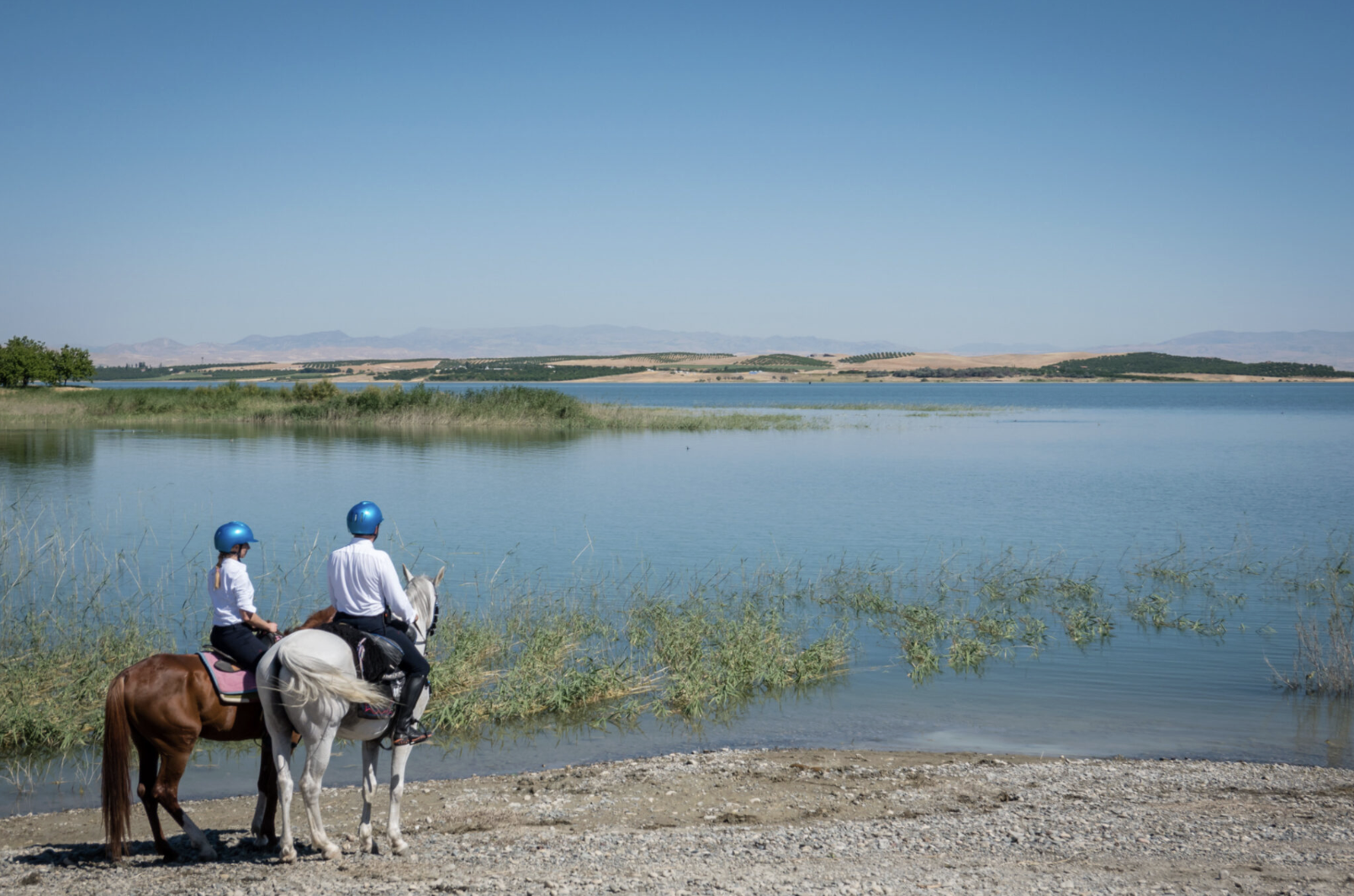
Chi visita l’altopiano della Giara può vivere un’esperienza straordinaria: camminare o cavalcare in un paesaggio unico e incontrare branchi di cavalli liberi che si muovono tra boschi, prati e piccoli laghetti stagionali.
An encounter that serves as a reminder of how deeply rooted the relationship between horses, nature and the local landscape still is in some of Italy’s most unspoilt areas.