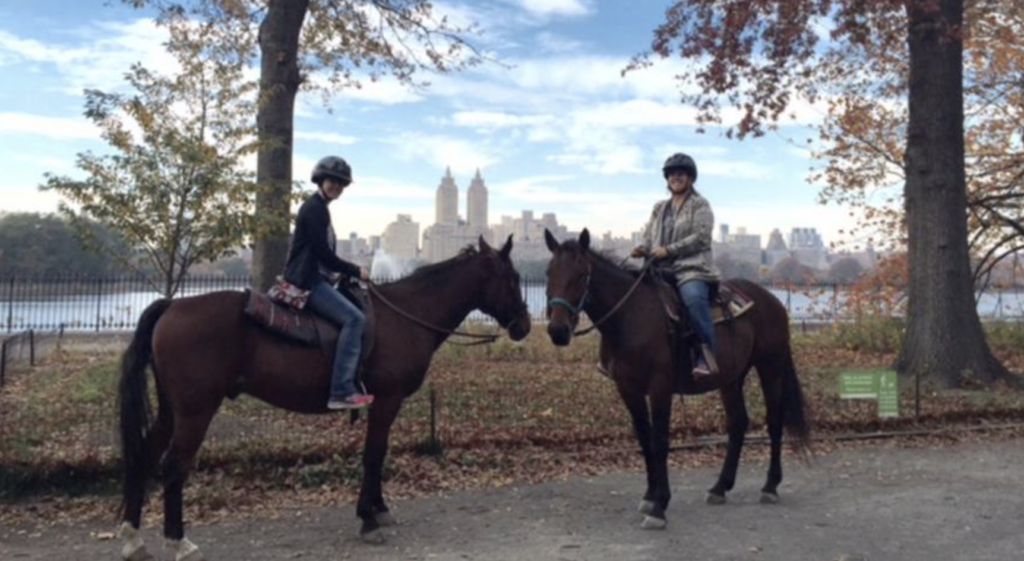
In the green heart of Manhattan in New York City, Central Park is home to one of the most fascinating traditions of urban horse riding: the Bridle Path, a historic route stretching some six kilometres that has been reserved exclusively for horses ever since the park was designed in the 1860s.
The route winds among lawns and small groves, linking the Great Lawn with Harlem Meer. For decades it offered a dedicated place to ride within New York’s urban setting: a seemingly timeless space where the noise of the city gives way to the rhythm of hoofbeats.
With the closure of the Claremont Riding Academy in 2007 – which had been offering horse rides within the park for over a century – public rides along the Bridle Path virtually came to a halt. For almost twenty years, Manhattan thus lost a significant part of its equestrian tradition.
Today, however, things are changing. The Miller’s Horse Company has announced the return of horse-riding tours along this historic route, teasing the news on social media with the evocative slogan: “Central Park, from the saddle. Soon” .
The walks, organised in collaboration with Manhattan Saddlery, the city’s historic saddlery, which will provide equipment and technical support, plans to keep group sizes extremely small: a maximum of two riders, always accompanied by a guide. This approach is designed to ensure safety, control and the quality of the experience.
As might be expected, the project has provoked mixed reactions. On the one hand, some animal rights activists have expressed concern about the impact of noise, traffic and the urban environment on the horses’ welfare. On the other hand, there are those who see this initiative as a significant revival of the city’s equestrian tradition, provided it is managed with care and responsibility.
Miller’s Horse Company has stated from the outset that the animal welfare is the top priority. Concrete measures have already been put in place: transporting horses in specially equipped vans, selecting animals based on temperament and level of training, a rotation system to limit the workload, frequent breaks, two days of rest per week, a controlled diet and regular veterinary care.
Weather conditions will also be a key factor: walks will not take place when temperatures exceed 32 °C or fall below -8 °C, to ensure the animals’ comfort and safety.
Each outing will be supervised by qualified staff and will take place exclusively along the historic Bridle Path route, without any detours or potentially hazardous routes.
And so, amidst the rustling of the leaves and the glistening waters of the ponds, the return of horses to Central Park is not merely a tourist attraction, but a genuine attempt to reconcile history, tradition and responsibility.
In the heart of the city that never sleeps, the Bridle Path could once again tell stories of urban horse riding, respect for animals, and a different – and slower – way of rediscovering Manhattan… on horseback.