The Purebred Arabian is one of the most fascinating and instantly recognisable horse breeds in the world. A horse that never fails to turn heads, capable of evoking images of boundless deserts, caravans and ancient civilisations. Its origins are so ancient that they are lost in the mists of time: it is estimated that they date back to over 4,000 years ago. Frescoes discovered in Egypt show that horses with similar characteristics were already present as early as 2000 BC, confirming the deep connection between this race and North Africa.
Legends steeped in poetry surround his birth. According to Arab tradition, he was Allah himself who created the Purebred Arabian with a touch of the Southern Wind, endowing it with speed, stamina and an indomitable spirit. A symbolic tale that seems to be borne out by its extraordinary physical and character traits.
Caratteristiche fisiche e temperamento
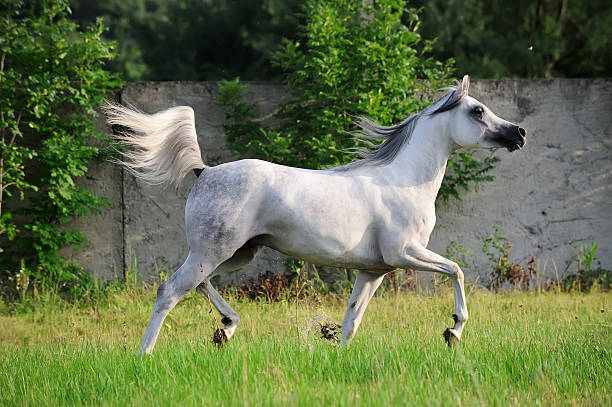
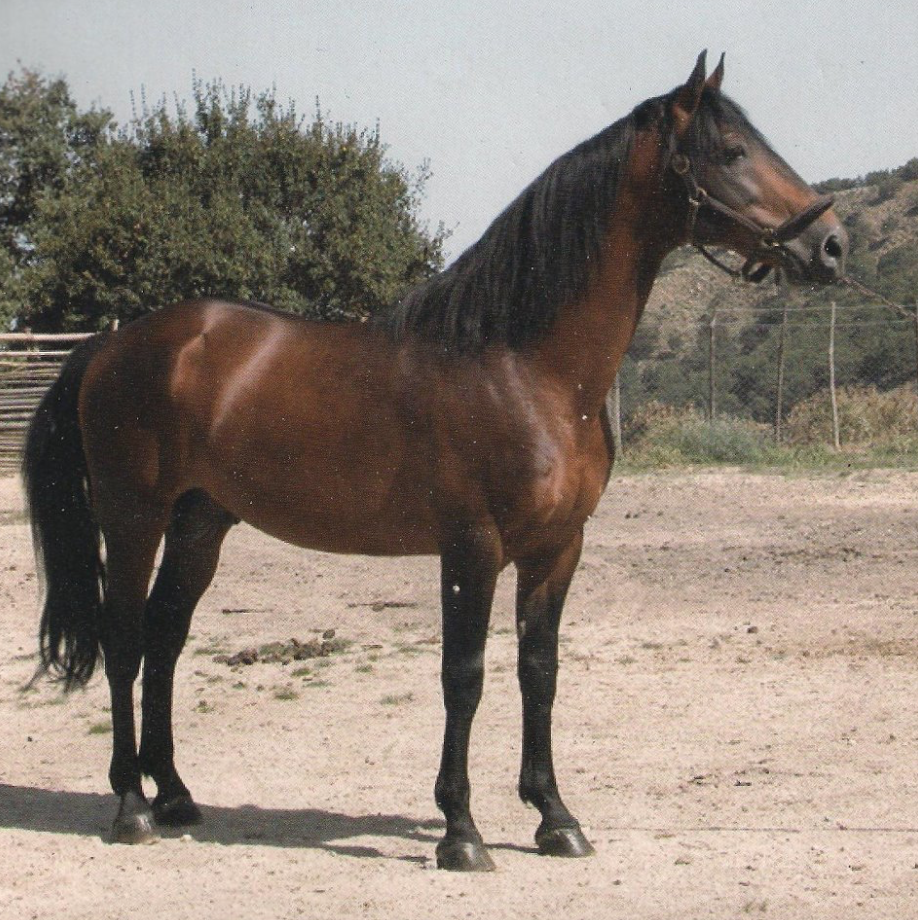
The Arabian horse is elegant, harmonious and incredibly expressive. Its head is small and sculpted, with a typically snub nose, wide nostrils and large, bright eyes that convey alertness and intelligence. The ears are short and slightly curved, and the neck is arched and proud. The coat, short and glossy, reveals subtle streaks that accentuate its refined appearance.
One of its most striking features is its skeletal structure: the Arab horse has 17 ribs, 5 lumbar vertebrae and 16 caudal vertebrae, unlike most horses. This characteristic affects the posture of the high ponytail and in its movement, which is smooth, supple and almost floating. It is of modest stature, averaging around 150 cm at the withers, but this in no way limits its performance. The most common coat colour is grey, followed by chestnut, bay and black.
In terms of temperament, the Purebred Arabian is lively, sensitive and very attached to humans. Centuries of close coexistence with nomadic peoples have shaped a horse that is cooperative, attentive and deeply reliable.
Areas of distribution: North Africa and the Middle East
Il Purosangue Arabo si è sviluppato principalmente nelle regioni del Middle East and of the North Africa, a region characterised by extreme climates and challenging terrain. It has historically been linked to Penisola Arabica (Saudi Arabia, Yemen, Oman), but also to countries such as Egypt, Syria, Jordan, Iraq and Iran. In North Africa, its influence is strong in Egypt, which is still regarded today as one of the most prestigious centres for livestock breeding, and extends to Libya, Tunisia and Morocco, where it contributed to the development of local breeds and historic crossbreeds.
In these regions, the Arabian horse was not merely a means of transport or a warhorse, but a true member of the family, carefully selected for its stamina, courage and temperament.
Il cavallo Arabo e l’equiturismo
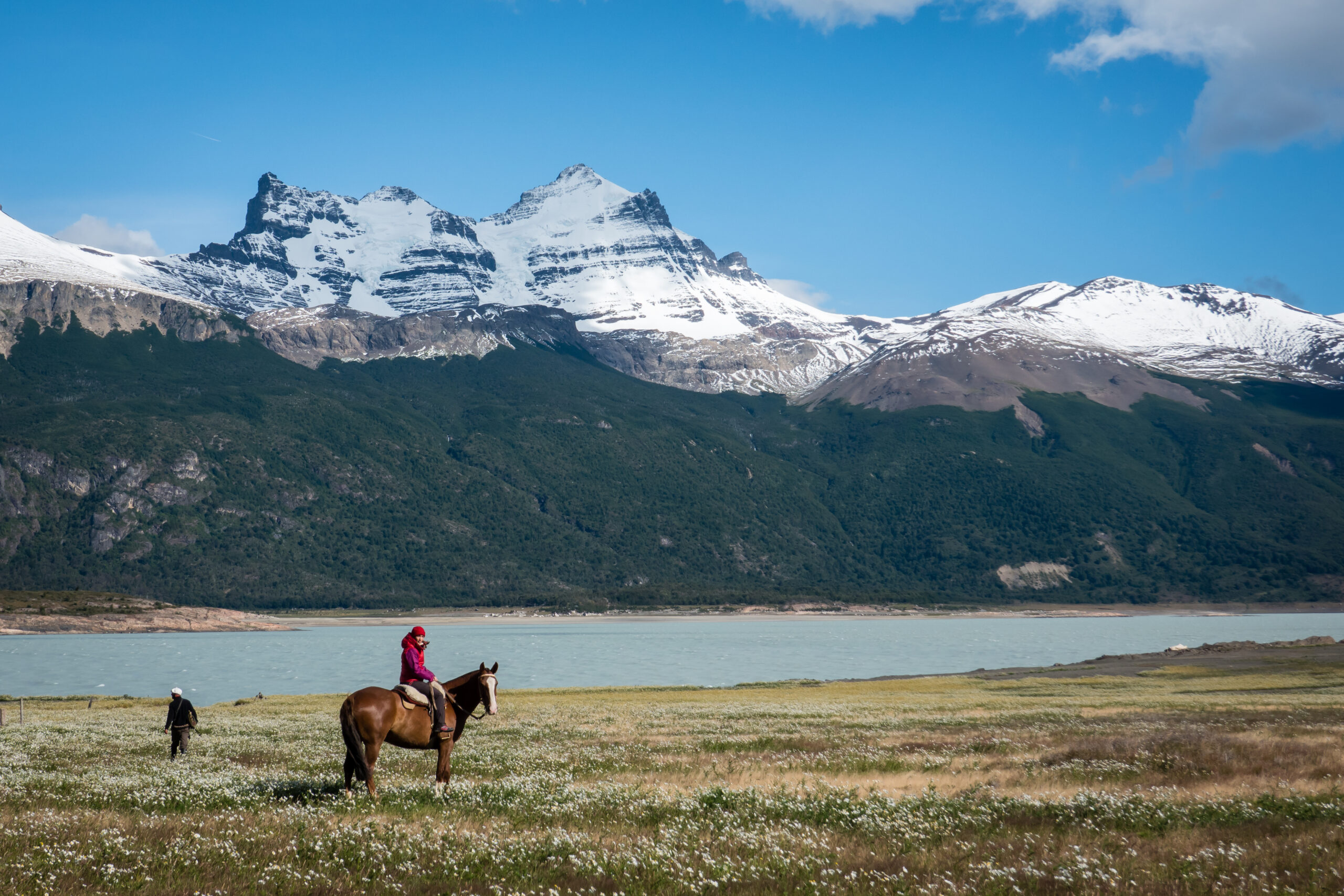
It is precisely its history and characteristics that make the Purebred Arabian the ideal companion for equestrian tourism. Having spent centuries covering long distances in harsh environments, it is a tireless horse, capable of maintaining a steady pace for many hours without becoming unduly fatigued. Its stamina, combined with its ability to thrive on a simple diet, makes it perfect for treks lasting one or more days.
Inoltre, il suo temperamento equilibrato e la forte predisposizione al rapporto con l’uomo lo rendono adatto anche a cavalieri non esperti, purché sensibili e rispettosi. È un cavallo che ama collaborare, curioso dell’ambiente che lo circonda e sicuro sui terreni più vari: sentieri di montagna, colline, spiagge o piste sabbiose.
It is no coincidence that today the Purebred Arabian is highly regarded not only in endurance riding – a discipline in which it excels – but also in equestrian tourism, where it combines reliability, riding comfort and a beauty that makes every riding experience all the more intense.
Il Purosangue Arabo non è soltanto un cavallo: è storia, leggenda e movimento. Un compagno di viaggio ideale per chi cerca nell’equiturismo non solo l’avventura, ma anche una connessione autentica con il cavallo e con il territorio che si attraversa.